
Home / Programmes
Programmes
Six programmes, eighteen months to five years
Mosaic is organised into five rooms, a school-readiness strand and a set of after-nursery clubs. Each room has a published ratio, its own name and its own rhythm.
18 – 24 months
Toddlers · Pink Class
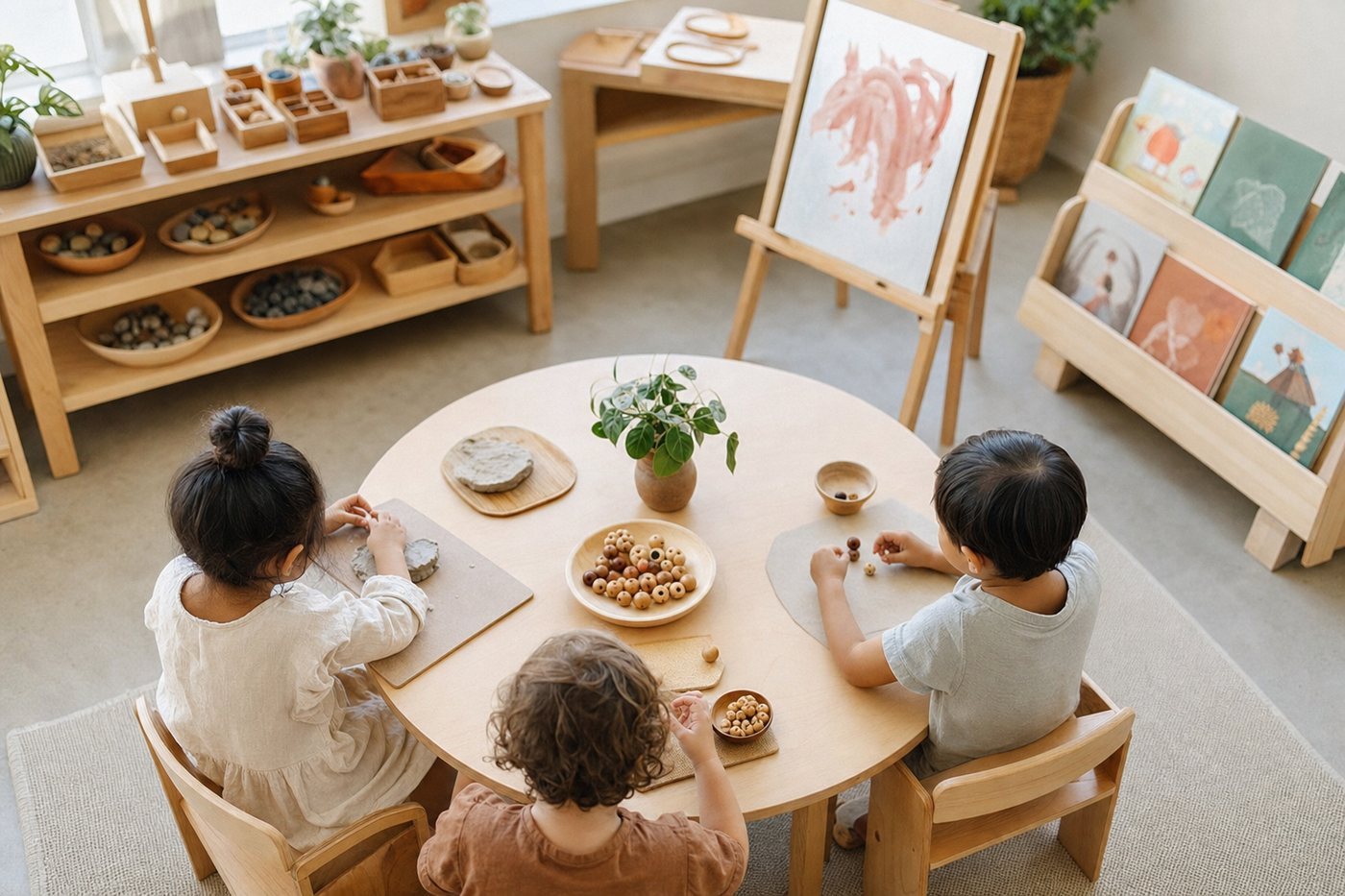
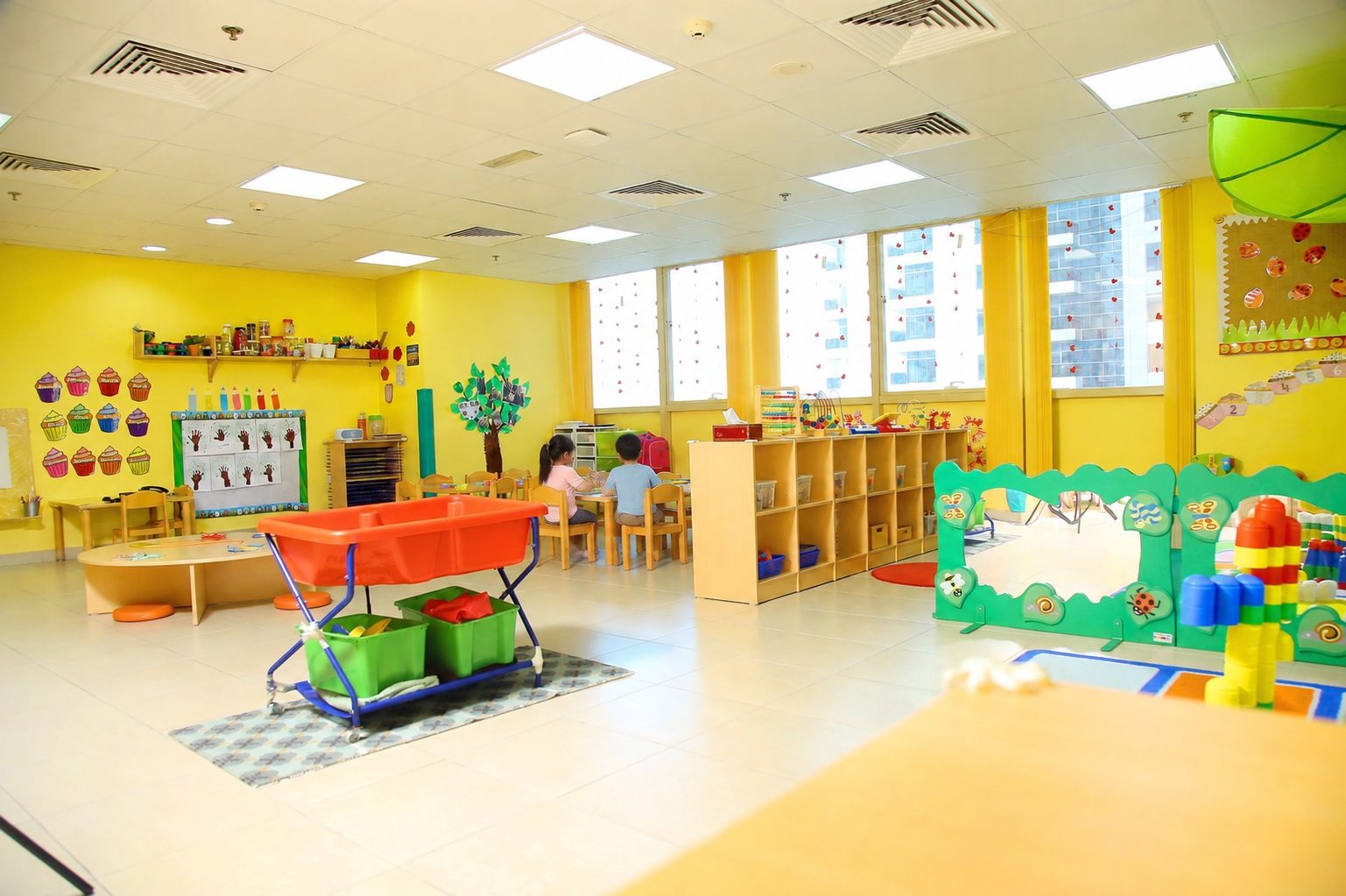
Pink Class is a room for children who have just started to move and are about to start to talk. Everything in it can be climbed on, pushed, filled or emptied, because that is what this year is for. Children who still nap twice a day do; children who have dropped to one do too.
What they are working on
- Walking, climbing and carrying heavy things across the room
- First words, then two words together, then naming what they want
- Eating at a low table with a spoon and an open cup
- Noticing other children, and beginning to hand something over
A typical day
- 8:00 – 8:45
Soft arrivals, breakfast and a quiet table activity
- 9:00 – 10:30
Sensory play, blocks, dough, books and heavy work
- 10:30 – 11:15
Playroom: Slides, water and pushing things up a slope
- 11:45
Lunch together at low tables
- 12:30 – 2:30
Nap in the sleep room, with qualified staff in the room
- 2:45 – 6:00
Milk and fruit, songs, second play period, staggered collection
2 – 3 years
Early Learners · Yellow Class & Purple Class
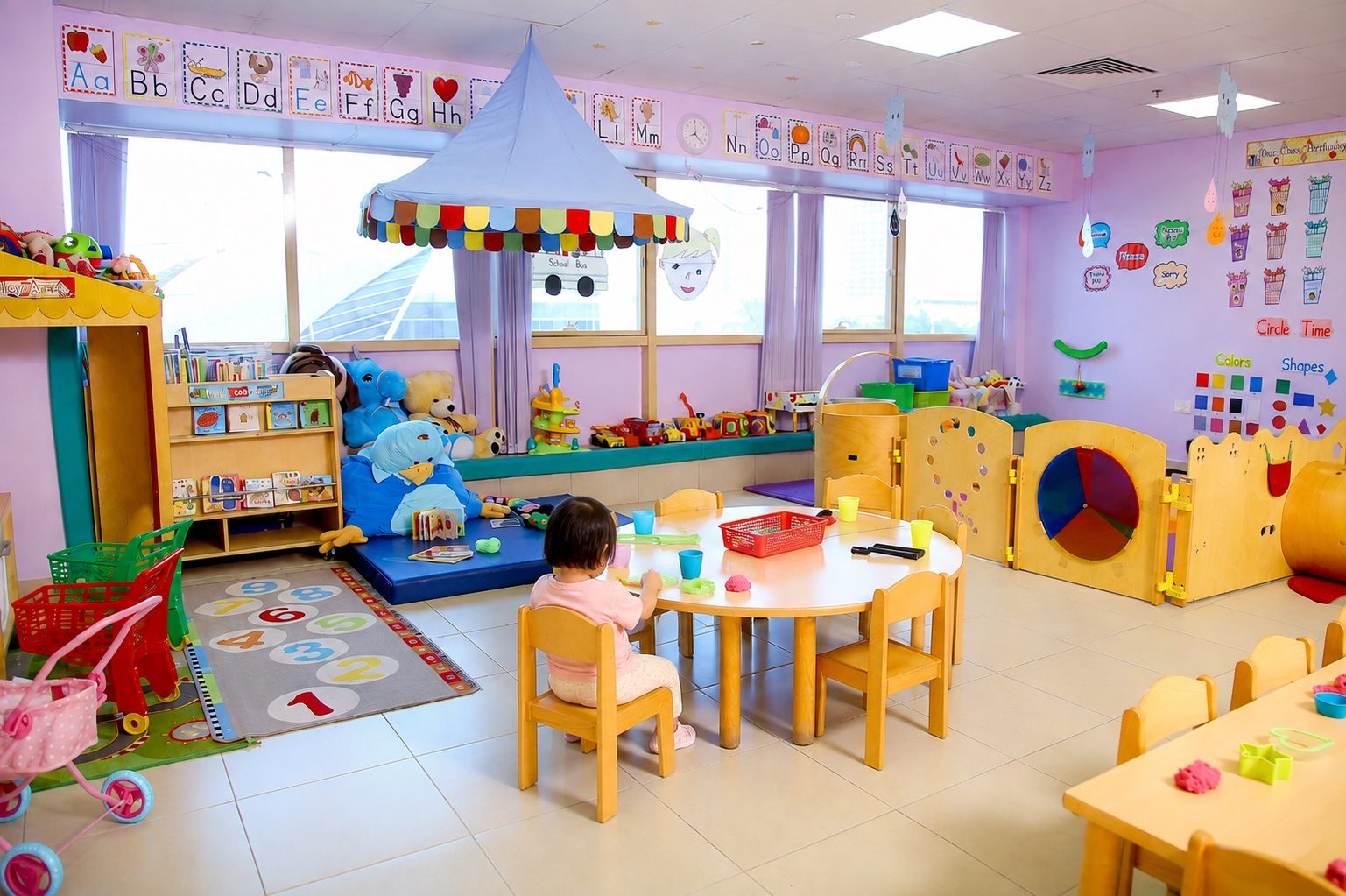
Yellow Class and Purple Class are the busiest, most physical rooms in the nursery. Language accelerates, pretend play appears, and children begin to play with each other rather than beside each other. The rooms are arranged in clear areas — construction, home corner, small world, books and creative materials — and children move between them freely.
What they are working on
- Sentences of four or more words, and asking for what they need
- Toilet learning, at their pace and consistent with home
- Taking a turn with an adult nearby, and recovering when it goes wrong
- Sorting, matching and counting things that matter to them
A typical day
- 8:00 – 8:45
Soft arrivals and self-registration
- 9:00 – 10:45
Long play across the room, with adult-led small groups inside it
- 10:45 – 11:30
Playroom and gross-motor work
- 12:00
Lunch, served family-style
- 1:00 – 2:30
Story time; books and quiet work
3 – 4 years
Preschool (FS1) · Blue Class
Blue Class is where the investigations get long. A study of buildings or water runs for about six weeks, and the room changes around the question. Children still choose most of their morning, but the adult-led element grows: small-group work, a project book, and specialist Arabic, music and movement sessions during the week.
What they are working on
- Sustained pretend play with two or three other children
- Hearing the first sound in a word, and mark-making with intent
- Counting reliably, and using number to solve a real problem
- Explaining an idea to an adult, and changing it when it does not work
A typical day
- 8:00 – 8:45
Arrival, self-registration and a quiet table activity
- 9:00 – 10:45
Investigation work and continuous provision, with focused small groups
- 10:45 – 11:30
Playroom and gross-motor
- 12:15
Lunch, with children serving and clearing
- 1:00 – 2:00
Quiet reading and calm work in the library nook
- 2:15 – 6:00
Snack, specialist session, second play period, reflection circle, collection
4 – 5 years
Pre-KG (FS2) · Gold Class
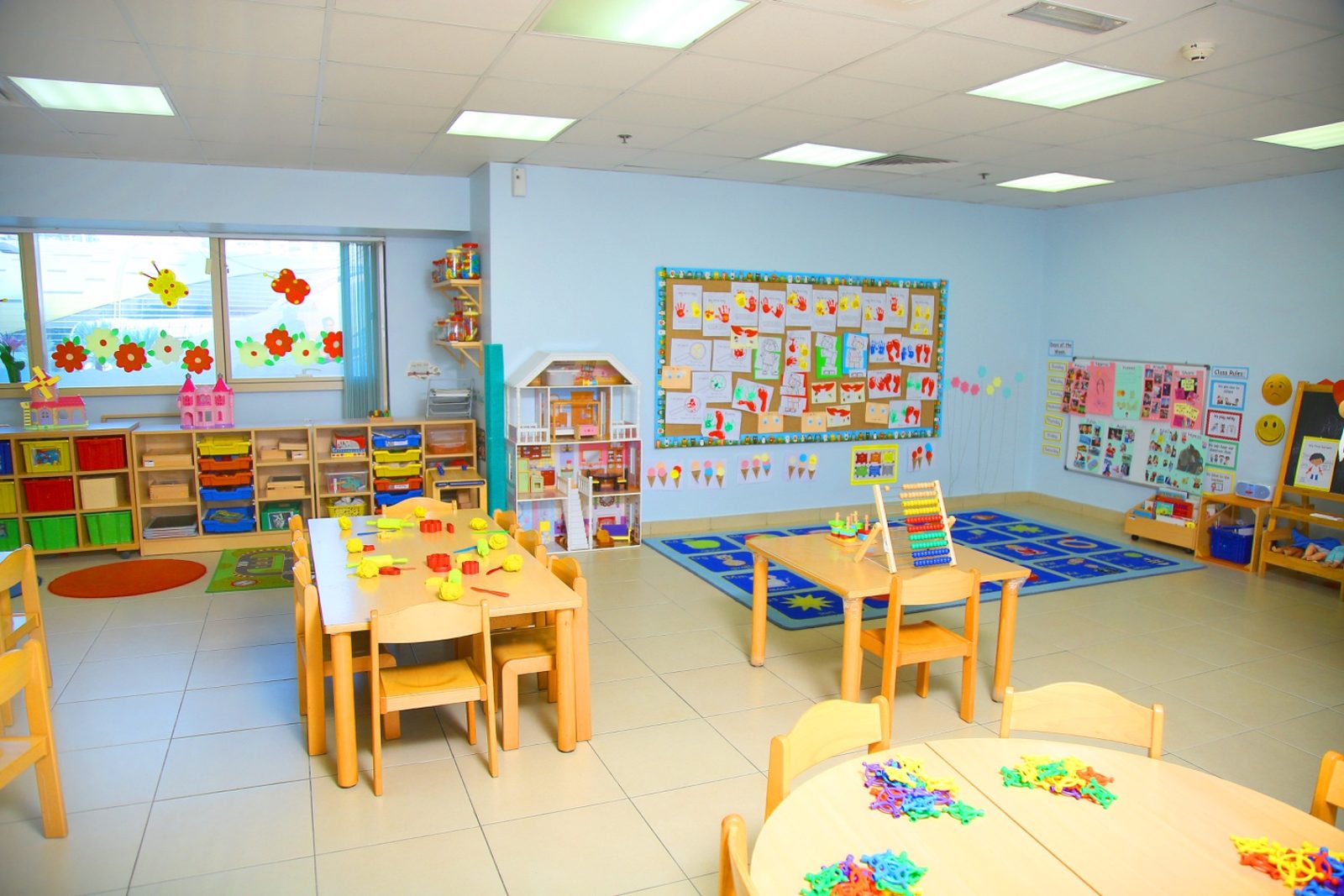
Gold Class is a room for children in their last full year before school. There is a woodwork bench, a writing table nobody is made to sit at, and a great deal of negotiation. Short daily phonics-awareness and number sessions sit inside a day that is still mostly chosen play, because that is what holds at four.
What they are working on
- Writing their own name, and hearing sounds all through a short word
- Counting on and back, and recording numbers their own way
- Sustaining attention in a group for ten to fifteen minutes
- Managing a bottle, a lunch box, a coat and a queue without help
A typical day
- 8:00 – 8:45
Arrival, self-registration and morning jobs
- 9:00 – 10:45
Investigation work, with daily phonics and number small groups
- 10:45 – 11:30
Playroom, games with rules and gross-motor
- 12:15
Lunch, laid and cleared by the children
- 1:00 – 2:00
Quiet reading and project work
- 2:15 – 6:00
Snack, specialist session, clubs, reflection circle, collection

Final year before school
School Readiness · Programme
School Readiness is not a separate room. It is the strand that runs through a child's final year with us, and it exists because the gap between nursery and a Dubai FS1 classroom is practical far more than it is academic. We work on the things that make a first term easier: asking an adult for help, sitting in a group, and believing that school will be fine.
What they are working on
- Separating calmly at a door that is not ours
- Asking an unfamiliar adult for help, out loud
- Holding a pencil comfortably and writing their name unaided
- Following a two-step instruction in a group of twenty
A typical day
- Within the morning
Focused literacy or number group, fifteen to twenty minutes
- Summer term
Mock school mornings — register, lining up and a lunch box
2 – 5 years · after the nursery day
Enrichment Activities
Enrichment clubs run term by term after the nursery day, and are open to Mosaic children and to children from outside the nursery. Each club is capped so that no group is larger than twelve, and coaches are either our own specialists or external providers we have checked and insured.

We run engaging enrichment programmes for children over the term, after the nursery day. Clubs include Arabic Club, Art, Ballet, Cooking, Football, Music & Movement, and Yoga & Mindfulness.
How a club works
- The club runs 3:30 – 4:30 in the class or playroom
- Collection from the club at 4:30, or back into the afternoon room until 6:00
- A short note on the parent app about what your child did
Clubs are booked a term at a time and places are capped so that no group is larger than twelve. Children who do not attend Mosaic during the day are welcome, subject to registration and a signed consent form. Ask the office for the current term’s timetable and prices.
Coaches are either our own specialists or external providers who hold their own insurance, police clearance and paediatric first aid. A Mosaic practitioner remains with every group.
“We moved him up to Early Learners in the middle of the year and it was handled properly — three weeks of short visits with his old key person, and then he just stayed. No tears on the day.”
At a glance
Compare all programmes
Ages, ratios, hours, rooms and start points side by side, for children aged 18 months – 5 years. Fees by programme are on the admissions page.
| Programme | Ages | Ratio | Hours | Room | Starts |
|---|---|---|---|---|---|
| Toddlers | 18 – 24 months | 1:5 | 8:00 – 6:00, 8:00 – 2:00 or 8:00 – 12:30 | Pink Class | Rolling, subject to space |
| Early Learners | 2 – 3 years | 1:6 | 8:00 – 6:00, 8:00 – 2:00 or 8:00 – 12:30 | Yellow Class & Purple Class | August intake, or rolling if space allows |
| Preschool (FS1) | 3 – 4 years | 1:8 | 8:00 – 6:00, 8:00 – 2:00 or 8:00 – 12:30 | Blue Class | August intake, or rolling if space allows |
| Pre-KG (FS2) | 4 – 5 years | 1:10 | 8:00 – 6:00, 8:00 – 2:00 or 8:00 – 12:30 | Gold Class | August intake |
| School Readiness | Final year before school | 1:10 | Inside the Pre-KG day | — | August, with the Pre-KG cohort |
| Enrichment Activities | 2 – 5 years | varies | 3:30 – 4:30 PM, term time | After nursery | Start of each term |
Ratios shown are the numbers we publish and staff to. The nursery manager and administrative staff are never counted inside a room ratio, and absence is covered from our own bank of trained relief practitioners rather than by increasing group sizes.
Places for the 2026–27 year
Come and see a real morning at Mosaic
The best way to choose a nursery is to stand in the room while it is being used. Tours run on weekday mornings, take about forty minutes, and always finish with time for your questions — no sales pitch, no obligation.
Or call +971 4 425 6670 · we answer between 8:00 AM and 6:00 PM, Monday to Friday.